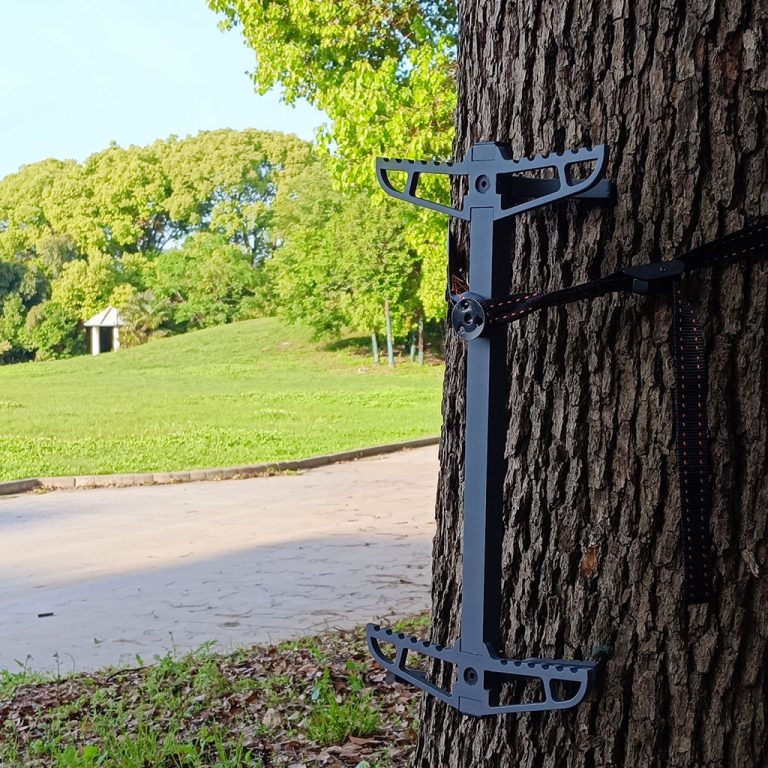

A treestand isn’t just welded steel and cast aluminum — it’s the result of deliberate engineering, tested strength, and deep knowledge of what a hunter expects at 20 feet up a white oak in November. At YH Hunting, we don’t take shortcuts on that. And we want to show you exactly how it happens.
Watch the full process in our latest video, then read on for the details behind each step.
Phase 1: Industrial Design & Concept Sketching
Every product at YH Hunting starts at the design table, not the factory floor.
Before a single tube is bent or a single bracket is welded, our industrial design team puts pencil to paper — or stylus to tablet. The concept sketch phase is where the product’s DNA is defined: what problem does this treestand solve? For which hunting style? At what weight, platform size, and folding profile?
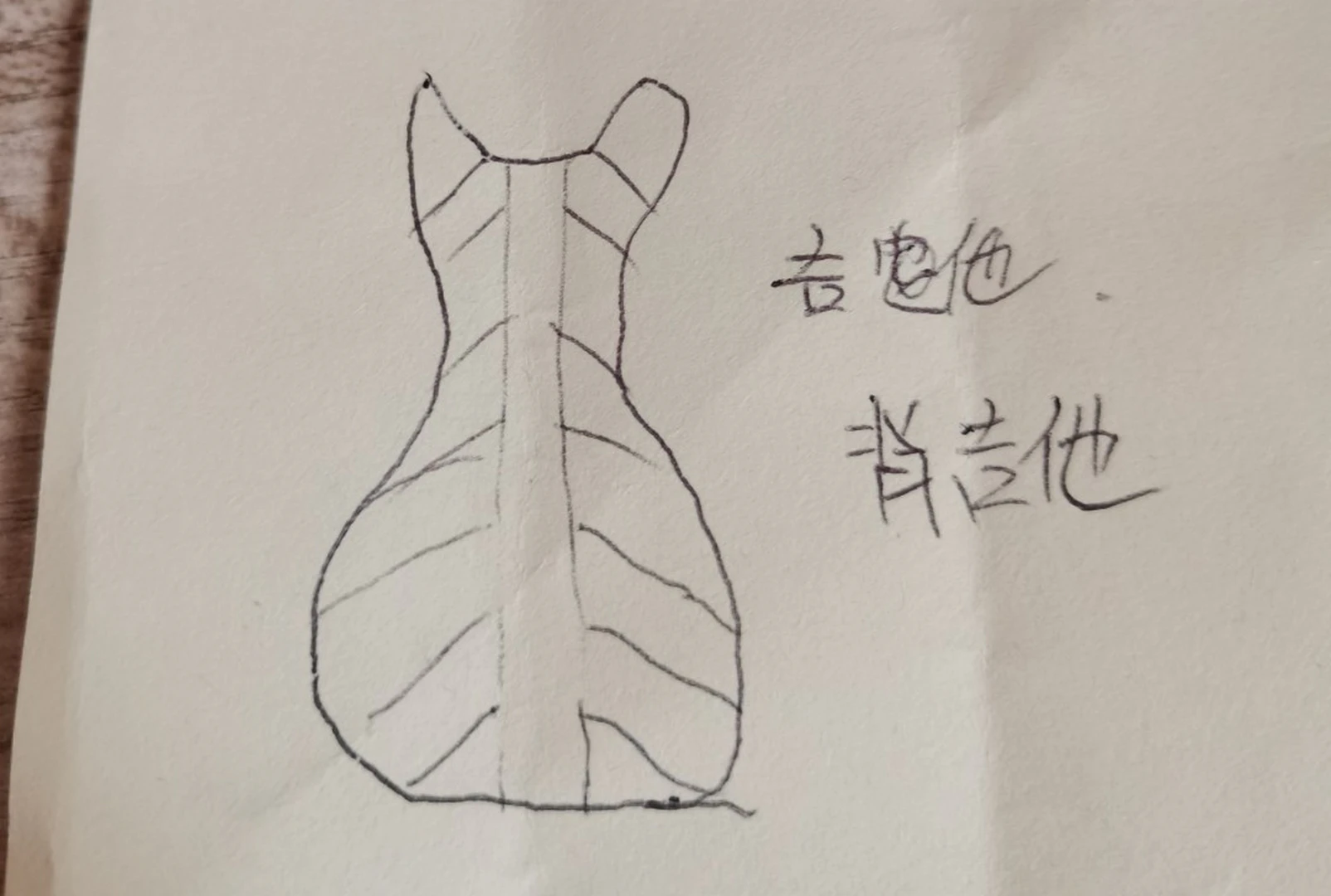
This is not about making something that looks good in a catalog. It’s about understanding the end user — the bowhunter who needs a silent setup at 4 AM, the public land hunter counting every ounce on a two-mile hike in, the saddle hunter who demands platform stability in a tree crotch.
Each sketch goes through multiple iterations, informed by years of hands-on hunting experience and direct feedback from the North American market.
Designed To Perform.
Phase 2: 3D Modeling & Structural Engineering
Once the concept sketch is locked, the design moves into SolidWorks and other professional 3D modeling environments. Here, the treestand’s every component — platform, seat post, cable attachment, folding joint, climbing bar — is modeled with full parametric precision.
But this isn’t just about 3D rendering for a pretty screenshot. The engineering team runs:
- Finite Element Analysis (FEA) — simulating stress distribution under load
- Kinematic simulation — testing folding and deployment mechanics
- Weight optimization — removing material where it doesn’t add strength
- Assembly interference checking — ensuring every bolt, pin, and weld joint functions in harmony
This is the phase where a deer stand transitions from a good idea to an engineered product. Design intent meets material science. Geometry meets load path.
Engineered To Last.
Phase 3: Engineering Drawings & Technical Documentation
The 3D model is only as useful as the drawings it produces. At YH Hunting, our engineering team generates full technical drawing packages for every component:
- Individual part drawings with GD&T (Geometric Dimensioning and Tolerancing)
- Welding assembly drawings with joint specifications
- BOM (Bill of Materials) with material grades, finishes, and sourcing references
- Quality inspection criteria and critical dimension callouts
These drawings aren’t just for internal use — they form the foundation of our OEM/ODM partnership model. When a customer approaches YH Hunting for hunting gear OEM development, they receive a complete engineering package, not just a quote. That’s the difference between a hunting gear manufacturer that builds to a spec, and a true product development partner that engineers alongside you.
Phase 4: Laser Cutting & Precision Fabrication
With engineering drawings approved and BOM confirmed, production moves to the fabrication floor. The first physical step: laser cutting.
Industrial fiber laser cutters take the flat-pattern DXF files exported from the 3D models and cut steel plate and tubing with precision measured in fractions of a millimeter. This produces:
- Platform teeth and gusset plates
- Bracket arms and pivot components
- Seat base plates and adjustment tracks
Laser cutting isn’t just about speed — it’s about repeatability. Every platform plate that comes off the laser bed is identical to the 3D model within tolerance. That consistency flows through every subsequent step: welding fit-up, assembly alignment, and ultimately, the hunter’s experience of a treestand that feels solid and precise.
After laser cutting, components move through CNC bending, punching, and edge deburring before reaching the welding station.
Phase 5: Welding — Where Structure Meets Strength
Welding is where a treestand earns its strength. At YH Hunting, our welding process is built around:
- Certified welders with years of structural welding experience
- Robotic welding for high-volume, repeatable joints
- Custom jigs and fixtures designed in-house to ensure consistent geometry across every unit
- Multi-pass inspection: visual inspection at the weld station, followed by random destructive testing on batch samples
The platform-to-post connection, the cable anchor points, the folding joint assemblies — each of these is a safety-critical weld that cannot fail. Our welders understand that the person standing on this platform 20 feet up a tree is putting their trust in these joints.
This is the phase where the treestand ceases to be a collection of cut parts and becomes a unified load-bearing structure.
From Idea To Field.
Phase 6: Human Load Testing & Jump Testing
At YH Hunting, we don’t just test to a number on a spreadsheet. We put real people on our treestands — and we ask them to do things no hunter would ever do in the field. Because if it survives the extreme, it handles the everyday.
Human Load Test
A tester weighing well above the rated capacity steps onto the platform. The treestand must hold — no deformation, no creaking, no movement at the attachment points. This isn’t a “pass once and ship” test. It’s repeated across production samples.
Jump Test
A tester jumps on the platform — repeatedly — simulating dynamic shock loads far beyond anything a hunter generates during normal use. The goal: verify that the platform structure, cable system, and tree attachment all handle sudden impact without failure.
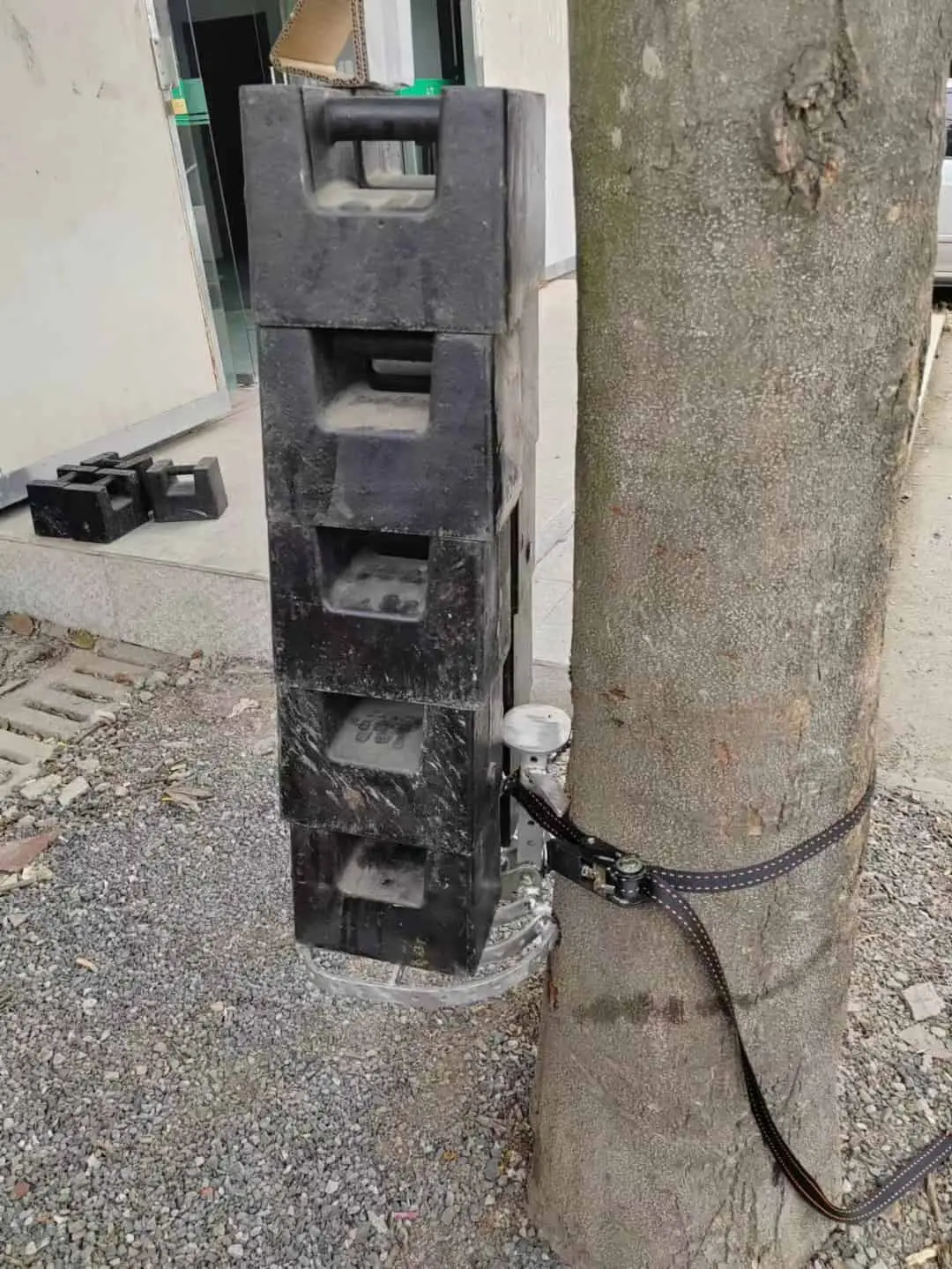
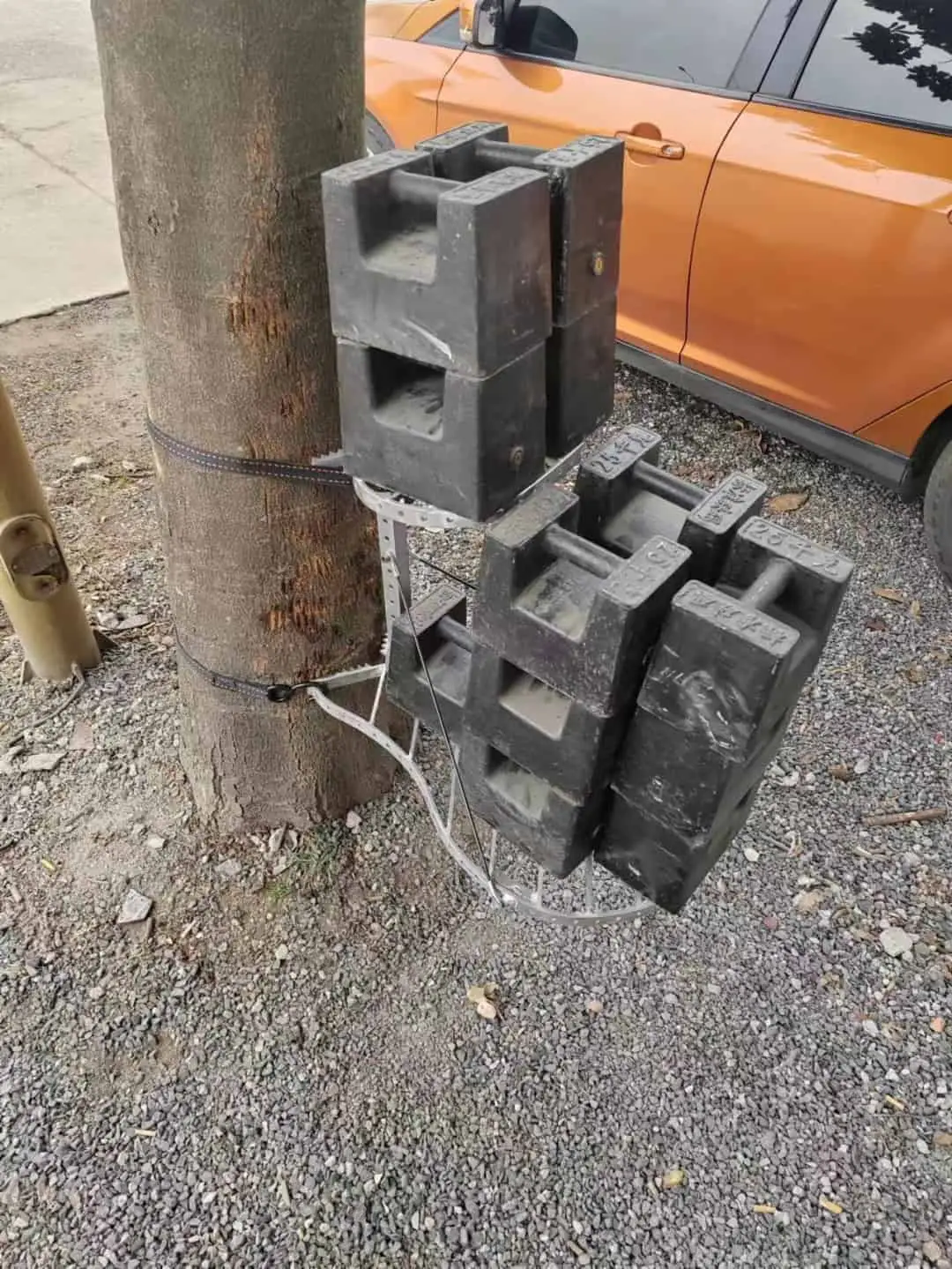
These tests happen on factory-installed test trees, with the treestand mounted exactly as a hunter would mount it. We record, we measure, we inspect — and if anything doesn’t meet spec, it goes back to engineering.
Phase 7: Static Pressure Testing — The Ultimate Proof
Beyond human testing, every treestand design at YH Hunting undergoes instrumented static pressure testing:
- Hydraulic or pneumatic load application at precisely controlled increments
- Digital strain gauge readings to map stress distribution against FEA predictions
- Load-to-failure testing on prototype and production samples to establish true safety margins
Why do we go this far? Because a treestand isn’t a consumer product that fails gracefully. When a deer stand gives way 20 feet up, consequences are severe. Our static pressure test protocol is designed to find the failure point — so we can ensure it’s far, far beyond anything a hunter will ever experience.
Safety isn’t a feature. It’s the foundation.
Phase 8: Surface Treatment, Assembly & Final Inspection
After passing all structural tests, the treestand components move through:
- Shot blasting — surface preparation for coating adhesion
- Powder coating or e-coat — corrosion-resistant finish rated for years of outdoor exposure
- Component assembly — seats, straps, cables, pins, and hardware installed to spec
- 100% final inspection — every unit checked before packing
Every YH Hunting treestand ships with a unique QC traceability code. If an issue is ever found in the field, we can trace it back to the production batch, the weld station, and the raw material lot.
What This Means for Hunting Brands: OEM Hunting Gear Done Right
The process described above isn’t just how we build our own products. It’s the same process we bring to every hunting gear OEM and hunting product development partnership.
When you work with YH Hunting, you’re not outsourcing production to a factory that made patio furniture last month. You’re partnering with a team that lives and breathes hunting gear — with industrial design, structural engineering, material science, and rigorous testing built into every project.
Here’s what sets YH Hunting apart in the hunting gear manufacturer landscape:
| Capability | What It Means for Your Brand |
|---|---|
| In-house industrial design | Your product starts with purpose-built design, not copied templates |
| Full engineering documentation | Complete GD&T drawings, BOM, and QC criteria — no guesswork |
| FEA + physical testing | Products validated with both simulation and real-world load testing |
| Dedicated jigs & fixtures | Consistent quality across production runs, not one-off craftsmanship |
| Material traceability | Every batch traceable to raw material, weld station, and QC record |
| One-stop solution | Design → Engineering → Manufacturing — single point of accountability |
This isn’t the “cheap factory” model. It’s the Design → Engineering → Manufacturing → Solution model. And it’s how we help hunting brands build products that earn customer loyalty — not warranty claims.
Designed To Perform. Engineered To Last.
For over 20 years, YH Hunting has been the behind-the-scenes force powering some of the most trusted names in the hunting industry. From Big Game Treestands to X-Stand, from Muddy Outdoors to Hawk Hunting — our team’s engineering DNA runs through products that hunters rely on every season.
Now, as YH Hunting, we bring that same capability directly to brands looking for a true product development partner.
Whether you need a complete treestand manufacturing solution, a new climbing system engineered from scratch, or a saddle platform optimized for the mobile hunting market — we are ready.
Let’s Build Something That Performs.
YH Hunting — Your Hunting Product Development Partner.
- 🌐 Website: www.yhhunting.com
- 📧 OEM/ODM Inquiry: kevin@yhhunting.com
- 📍 Operations: Based in China, serving North America and global hunting markets
From Idea To Field — That’s the YH Hunting promise.